
The part you can’t buy anymore?
We make it again.
Discontinued, snapped, or never sold in the first place — we scan it, redraw it in CAD, and print it in plastics built to live on the water. Marine work is where we’re sharpest, but a hard-to-find part is a hard-to-find part.
Reverse engineering, in plain terms
Old marine gear breaks and the manufacturer is long gone. A bracket shatters, a fairlead wears through, a fitting goes missing. We take what’s left — or the dimensions of where it bolts on — measure it, and rebuild it as a clean, parametric CAD model. If the original had a weak spot, we design it out.
Then we print it in the right material for the job and you bolt it back on. The same approach works for car parts, shop fixtures, and anything else you can’t order off a shelf.
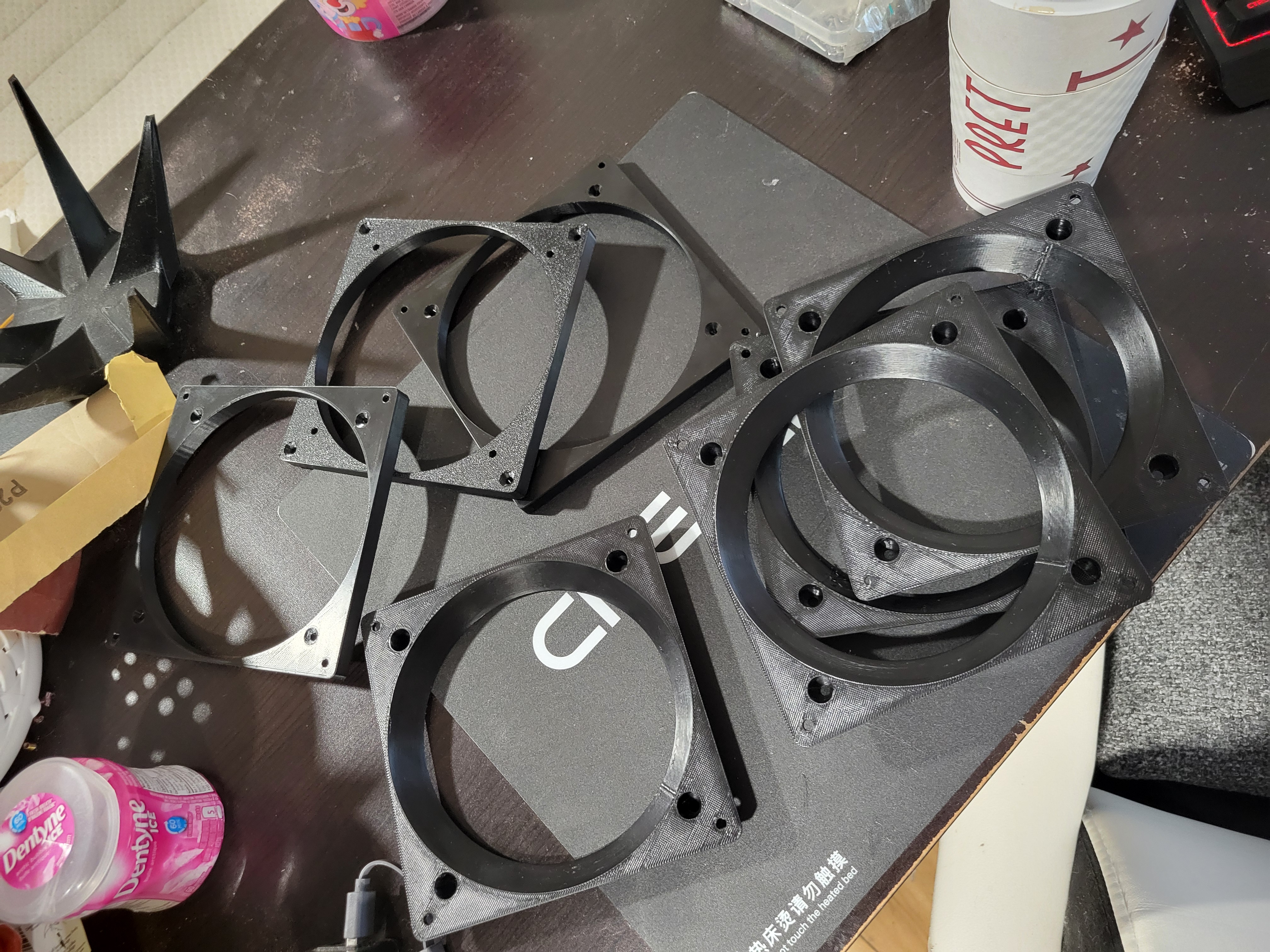 Reverse-engineered adapter rings
From broken part to bolted-on.
Measure or scan
We capture the part with calipers and reference photos — or 3D-scan it when the geometry is complex — to get the shape and the critical fits right.
Redraw in CAD
The shape becomes a clean parametric model, not a messy scan mesh. This is where we correct the flaw that broke it the first time.
Fit check
A quick test print in cheap plastic confirms it lines up on the boat before we commit to the real material.
Print for keeps
The final part runs in UV- and salt-ready ASA or carbon-fiber nylon, printed hot in an enclosed chamber so the layers fuse and stay fused.
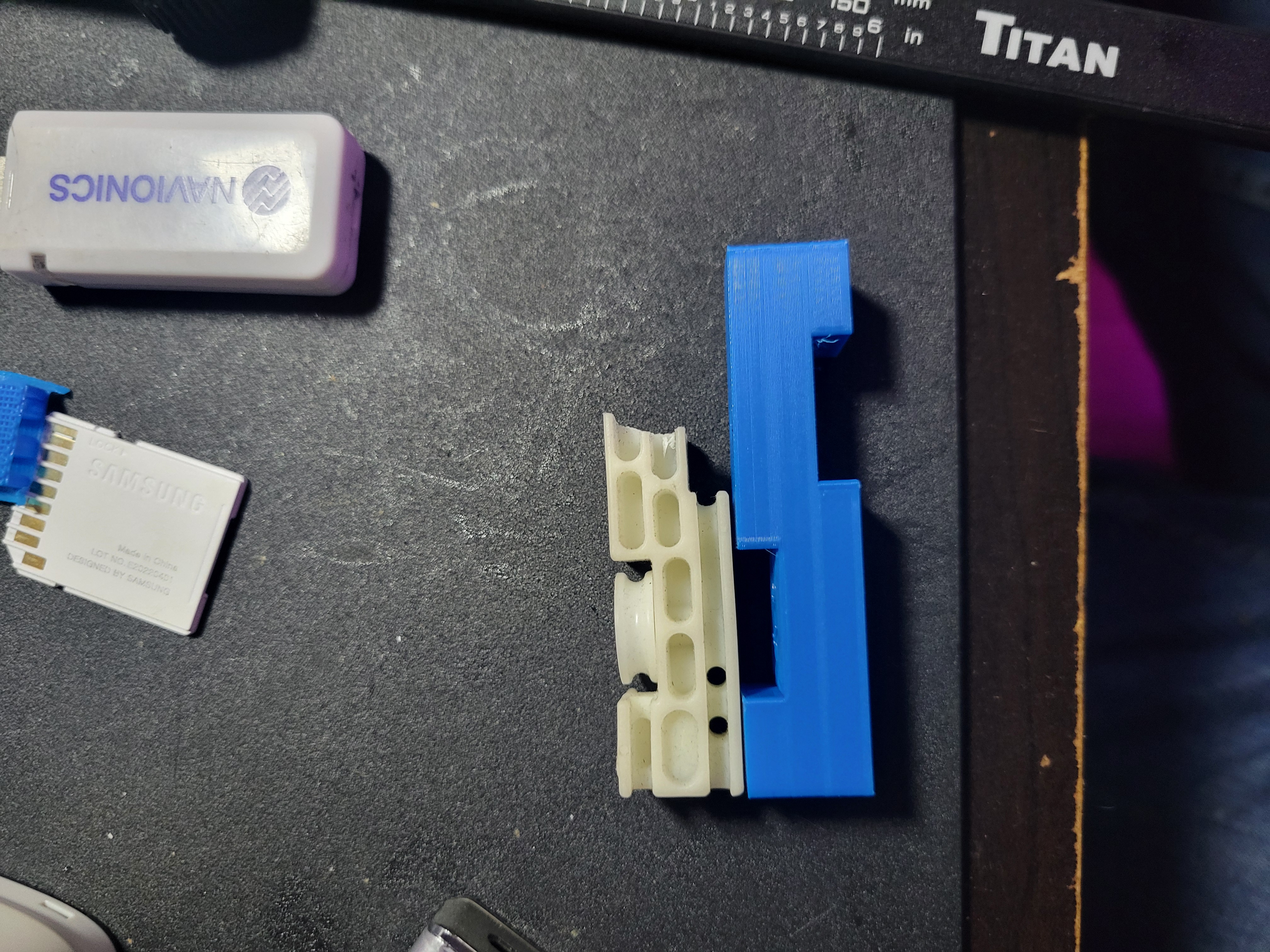 Custom electronics mount
Plastic chosen for the job.
Not all 3D printing is the same. A deck part needs to take sun; a bracket needs to take load. We match the plastic to where the part lives.
UV-stable, won’t fade or go brittle in the sun
Carbon-fiber nylon — stiff, strong, dimensionally stable
High impact resistance, can run clear
Tough, easy to print, good chemical resistance
Backed by Prusa, shared with everyone
Prusa gave us a Core ONE L to back what we’re doing — a big, fully enclosed machine that holds its temperature, so engineering plastics like ASA and carbon-fiber nylon print clean without warping or splitting between layers.
We believe designs should be shared. The parts we solve land on open repositories like Printables so the next person doesn’t start from zero. The community funds the work; everybody gets the answer.
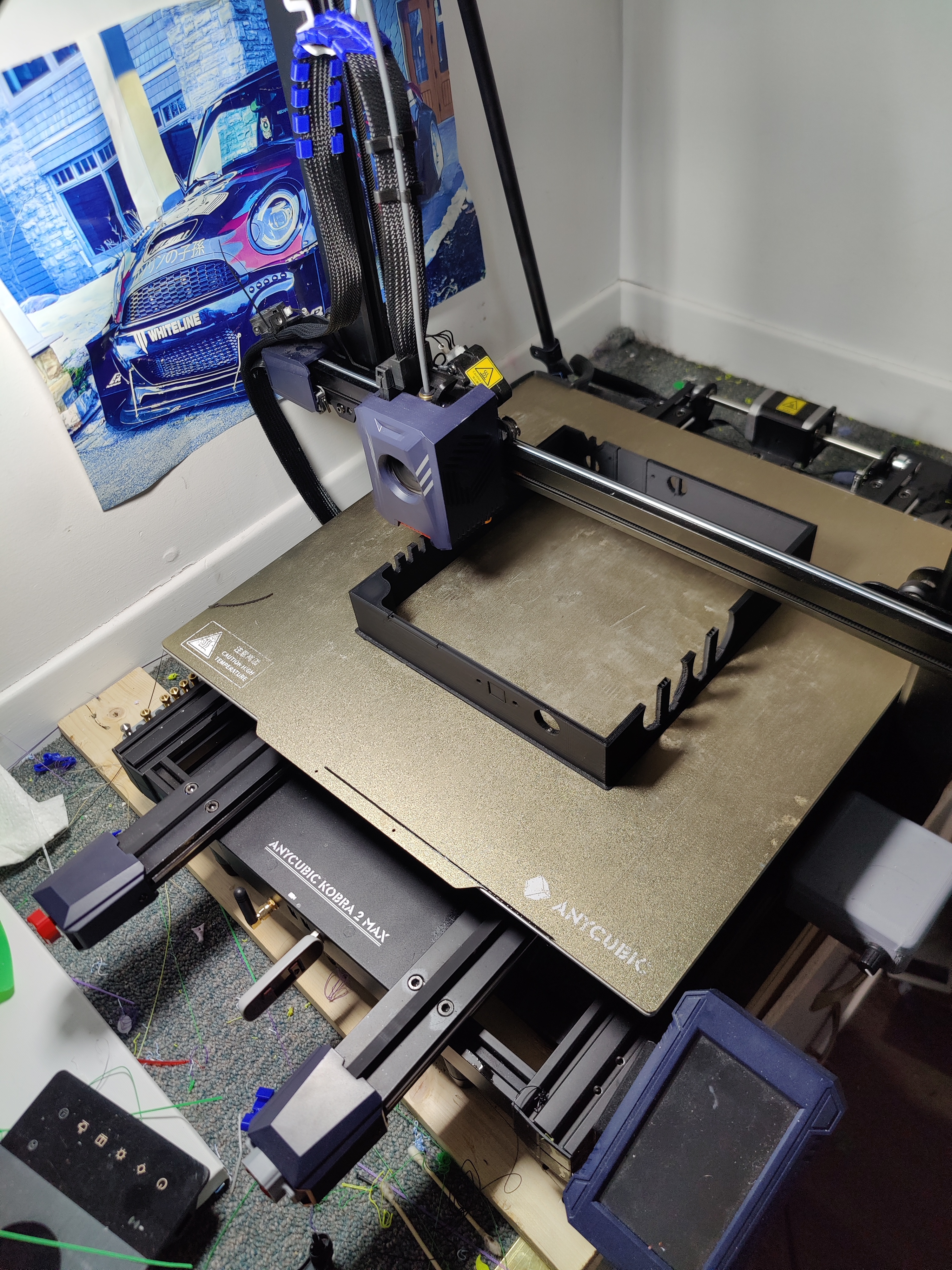 In the shop
Can you make a part that’s no longer sold?
That’s most of what we do. Bring us the broken or worn part — or even just the fragments and the dimensions of where it mounts — and we measure it, redraw it as a clean CAD model, and print a replacement. If the original design had a weak point, we fix it in the redraw.
Do 3D-printed parts survive salt water and sun?
The right plastic does. We print outdoor and deck parts in ASA, which is built for UV exposure and won’t go brittle or fade in the sun the way standard PLA does. None of the plastics we use corrode or blister in salt water the way cheap cast metal can.
Are printed parts strong enough to trust on a boat?
For the right jobs, yes. We don’t print primary standing rigging or anything where failure puts the crew at risk. We do print brackets, mounts, organizers, fairleads, trim, and housings in carbon-fiber nylon and ASA — parts that take real load and have held up through a season on the water.
What do you need from me to start?
The part (or what’s left of it), a few photos, and rough measurements if you have them. If the part is gone entirely, the make and model of the gear it belongs to is often enough to rebuild it from reference dimensions.
Do you share the designs you make?
Where it makes sense, yes. We post finished designs to open repositories like Printables after a hold period, so the next person with the same broken part doesn’t have to solve it from scratch. Solve a problem once, everyone gets the answer.
Got a part that’s beaten you?
Email info@3d3d.ca with a photo and what it’s off. We’ll tell you straight whether printing it makes sense — and if it doesn’t, what would.